



Buyer's Guide: Integrated Office Parking System vs Workplace Parking Software
How stadium access data supports better decisions before, during, and after an event
The first match with a new stadium access system is a serious test.
At Sunderland AFC, the pressure was particularly high. The match was being broadcast live on Sky, so thousands of supporters had to enter the Stadium of Light without risking the scheduled kick-off.
“Already the first match was successful. It happened to be on SKY, and so we really needed to make sure we got the kick-off on time,” says Steve Davison, Chief Operating Officer at Sunderland AFC. “Really pleasingly, we got everybody into the ground five minutes before kick-off. And that’s almost unheard of at a football game. We were absolutely over the moon with the way it had gone.”
For supporters, the process was simple. They presented the digital ticket stored on their smartphone and entered.
For the stadium team, each validation added another piece to a live operational picture.
One scan shows more than green or red
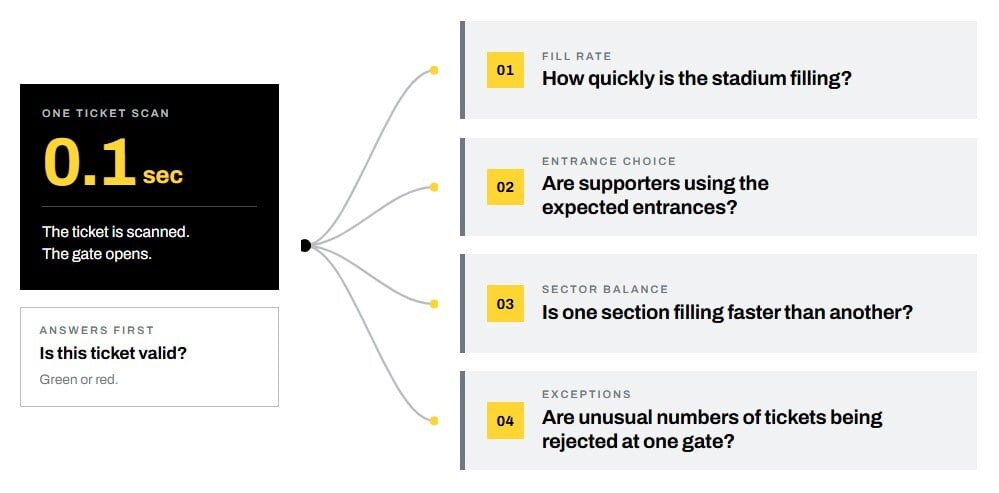
A stadium access system first needs to answer one question: Is this ticket valid?
Once thousands of scans are combined, the data can answer much more.
• How quickly is the stadium filling?
• Are supporters using the expected entrances?
• Is one section filling faster than another?
• Are unusual numbers of tickets being rejected at a particular gate?
At the 49,000-seat Stadium of Light, SKIDATA built a dynamic stadium map that shows fill and flow rates on matchday.
“SKIDATA built us a dynamic stadium map that allows us to monitor fill and flow rates on a match day,” explains Mark Stevenson, IT Infrastructure Manager at Sunderland AFC.
Security, IT, and ticketing teams can follow how entry is developing from a shared view. They can compare the live situation with the event plan and investigate changes before they become visible as long queues.
Data supports decisions while the stadium is filling
Supporters rarely arrive at a steady rate.
Some come early. Many wait until the final minutes before kick-off. Traffic, public transport, and supporter habits can also direct large groups towards the same side of the stadium.
This makes averages misleading. An access system may perform well across two hours and still face intense pressure during the final 20 minutes.
Real-time access data helps the control room understand where that pressure is building.
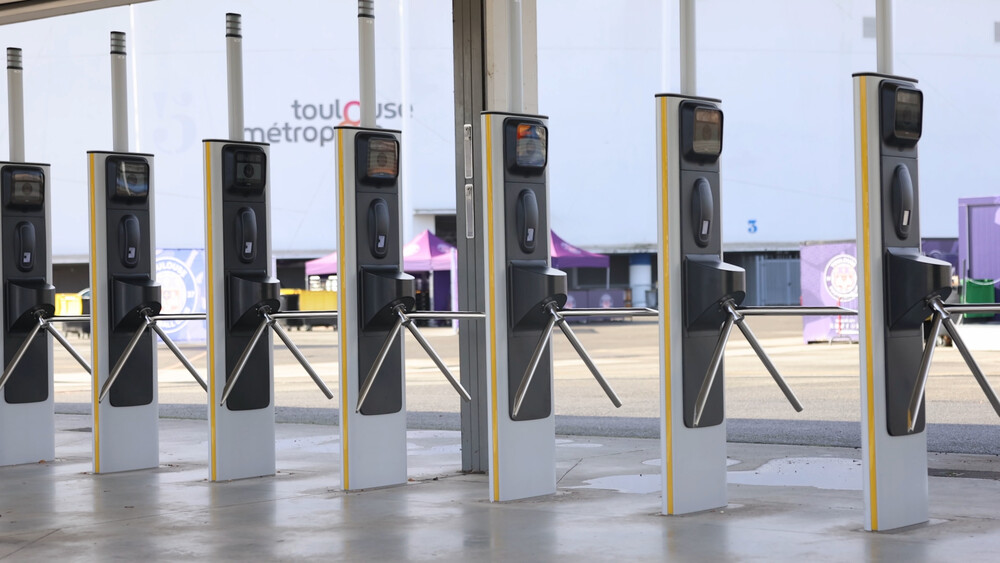
At Toulouse Stadium, each ticket scan provides live attendance information. Around 50 fixed SKIDATA sMove gates are supported by 49 handheld devices. When one entrance becomes busier, mobile validators can be moved to reinforce the checkpoint. Staff can respond to the actual arrival pattern rather than wait for a queue to become difficult to manage.
The data provides the signal. The stadium team decides what action makes sense.
Throughput still matters
Better information cannot compensate for an access system that processes supporters too slowly.
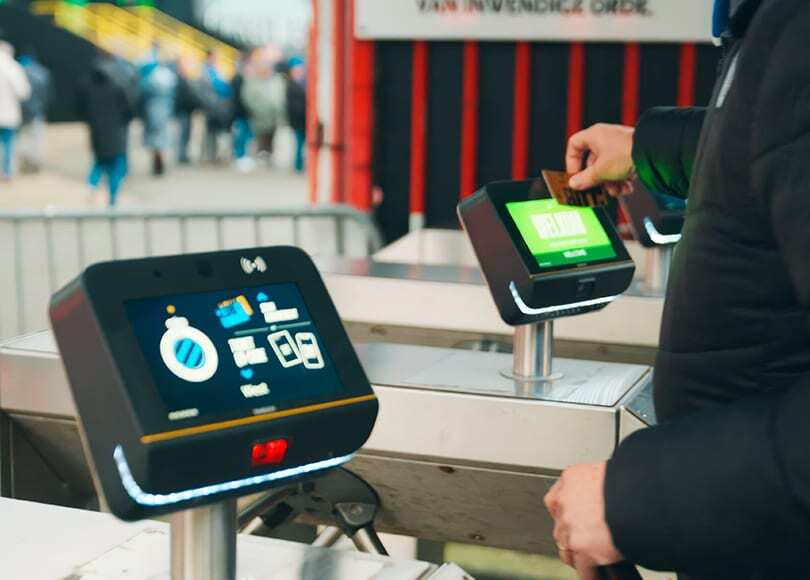
At Club Brugge, 61 readers installed on existing turnstiles and 28 handheld devices support entry at the Jan Breydel Stadium. During Champions League matches, the system can process up to 500 supporters per minute.
“The key benefit of SKIDATA’s new system is that it simply works,” says Vincent Winkelmans, Ticketing Officer at Club Brugge KV. “For our Champions League matches, we saw that we could allow up to 500 fans per minute into the stadium. That is a massive improvement compared to the past.”
Speed gives the control room room to act. When the main flow remains stable, teams can focus on the entrances, ticket categories, or visitor groups that require attention.
The data remains valuable after the gates close
Matchday decisions are only one part of the story.
After the event, access records can be reviewed alongside operational reports. Teams can compare entrances, time periods, and event configurations to understand what worked and what should change.
• Which gates handled the highest volumes?
• When did the main arrival peak begin?
• Where did throughput slow?
• Did a particular ticket category create repeated exceptions?
• Were staff and mobile devices positioned in the right places?
Categorized post-event reports can reveal recurring queue problems, zones with repeated incidents, and gates that cause delays. Consistent data turns individual observations into patterns that can guide the next event plan.
The result is a continuous cycle:
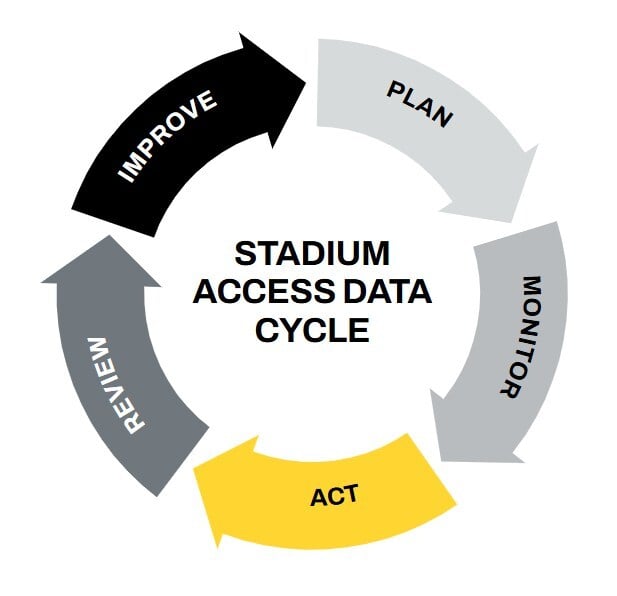
Plan the event. Monitor it live. Act in real time. Review the data. Improve the next event.
Different events require different configurations
The same stadium may host football, rugby, concerts, and major celebrations. Each event brings a different seating plan, arrival profile, and set of access requirements.
Cape Town Stadium, also known as DHL Stadium, has a capacity of 55,000 and supports a diverse event calendar. Its SKIDATA solution allows flexible access configurations for different event types, together with real-time monitoring, detailed reporting, and analytics.
That flexibility matters in the control room.
The expected fill pattern for a football match may differ significantly from a concert. Entrances may change. Areas may be reassigned. Different visitor groups may need access at different times.
The operational view needs to reflect the event taking place that day.
A brief interaction with lasting value
For supporters, good stadium access feels uneventful.
The ticket works. The gate opens. They continue towards their seat.
Behind that brief interaction, stadium teams receive information that can support immediate decisions and future planning.
A ticket scan lasts only a second.
Its data can help get everyone inside before kick-off, show the control room where attention is needed, and make the next event run even better.
Subscribe to our blog