


Buyer's Guide: Integrated Office Parking System vs Workplace Parking Software

How SKIDATA Connect gives cities one operational platform for zone management, curb management, and mobility hubs — with proof from Florence, Amsterdam, Linköping, Belgium and Benešov..
Cities don't buy parking technology. They buy answers to political questions:
- How do we keep the center accessible without choking it?
- How do we make the curb work for residents, deliveries, and visitors at the same time?
- How do we get commuters out of their cars without making the alternative feel like a punishment?
None of these questions can be solved by a single system working in isolation — and most cities have learned this the hard way, with zone access from one vendor, on-street management from another, and Park & Ride from a third.
SKIDATA Connect is the platform for parking and access management that ties these pieces together — not as another integration layer on top of the fragmentation, but as one backbone that integrates with city services across zones, curbs, and mobility hubs.
Problem 1: Zone rules without an operational backbone
Every European city now faces some version of the same challenge:
- Restricting vehicle access to sensitive areas while keeping those areas reachable.
- Low-emission zones, congestion pricing, residential permits, time-based access windows — the policy toolkit is well understood.
- Making those rules enforceable across every access point, every payment method, and every exception — consistently, automatically, and at a cost the municipality can sustain — is the hard part.
SKIDATA's Zone Management solution enables cities to define access rules - by residency, vehicle type, time of day, or duration of stay - and enforce them automatically through License Plate Recognition. SKIDATA supports both seamless LPR-based access without an app and app-based registration where drivers view tariffs and manage payments. Payment can be pay-per-use or subscription-based, with flexible pricing models that support greener mobility choices.
SKIDATA Connect provides the platform that ties these elements to the city's parking infrastructure, payment systems, enforcement workflows, and reporting — so that zone access, garage entry, and payment all run on the same backbone.

Florence: City-scale zone management with 15 facilities on one platform
Firenze Parcheggi, majority-owned by the Municipality of Florence, selected SKIDATA to upgrade its entire city-wide parking network: 15 facilities, over 6,000 spaces, 59 entry and exit points. All facilities are positioned outside the city's Limited Traffic Zone — the parking network is the zone management strategy, intercepting traffic before it reaches the restricted medieval center. Every site runs ticketless via LPR, with payments through Telepass, UnipolMove, and the Bmove app. A 24/7 Operations Center manages all 15 facilities through one centralized platform — the official infrastructure of one of the world's most visited and most protected cities, serving over 15 million annual visitors.
Amsterdam: Parking and access integrated with national policy infrastructure
The 800-space Singelgrachtgarage beneath the Singelgracht canal was built to relocate above-ground parking and reclaim street space for greenery, pedestrians, and cyclists.
Through SKIDATA Connect, the garage integrates with the national Servicehuis Parkeren- en Verblijfsrechten (SHPV) — the Netherlands' digital platform for parking and residence rights. Permits are issued by license plate. A residential permit for Amsterdam Center, East, West, South, or Southeast also grants automatic access to specific garages — making street parking and garage parking flow seamlessly into one another. This is not app integration. This is a parking and access platform connecting to national policy infrastructure.
Problem 2: The curb is the most contested asset cities own
On-street parking is no longer just about parking. The same meter of curb space is claimed by residents, short-stay shoppers, delivery vehicles, ride-hailing services, and EV chargers. Without a digital management layer, the allocation is first-come-first-served — which means double-parked delivery vans, blocked charging stations, residents circling for twenty minutes, and revenue left on the table.
SKIDATA's Curb Management solution brings digital control to on-street parking. LPR digitalizes access, payment, and enforcement. Drivers use a parking app like ePARK to see available spaces, start and stop sessions, and pay automatically. The system can guide drivers to nearby off-street facilities when on-street space is full.
Through SKIDATA Connect, the curb management system shares payment logic, enforcement data, and occupancy information with off-street parking infrastructure — giving the city one source of truth, not two competing dashboards.
Linköping: Unified on-street and off-street parking with full data sovereignty
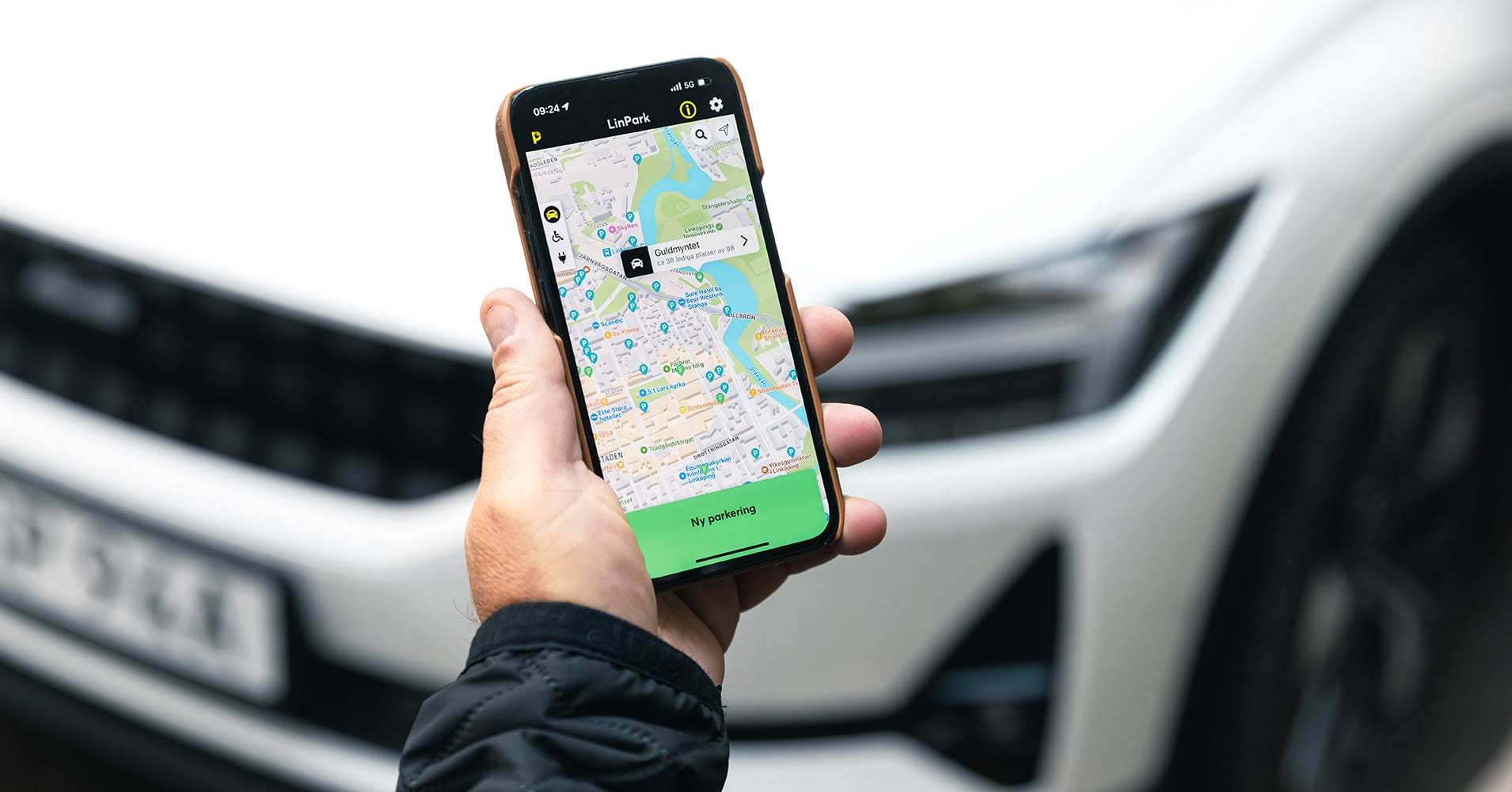
Partnering with Dukaten, SKIDATA deployed a city-wide platform that unifies on-street and off-street parking. The Linpark app — powered by SKIDATA Connect — serves as the single touchpoint for all parkers across 18+ parking garages and on-street zones. Registration grants access to fully automatic parking. LPR eliminates physical tickets. Parking guidance and digital signage direct drivers efficiently.
A critical differentiator: Linköping retains full control and security over all user-generated data. By building on SKIDATA Connect rather than relying on third-party platforms, the city eliminated external data dependencies — a detail that matters increasingly to municipalities navigating GDPR and digital sovereignty requirements.
Problem 3: Mobility hubs that nobody uses
The concept of a mobility hub is compelling: turn parking facilities into multimodal connection points where citizens park once, then switch to train, bus, bike, or scooter. Most hub projects stall not because the infrastructure is wrong, but because the parking side is fragmented — and if the first touchpoint breaks, the entire multimodal promise breaks with it.
Making hubs work doesn't require one system to orchestrate every mode of transport — that's the job of Mobility-as-a-Service (MaaS) platforms and broader smart city systems. But it does require that the parking and access layer works seamlessly and feeds into those wider systems.
SKIDATA's Mobility Hub solution handles this side of the equation: access control, EV charging, digital payment, and real-time monitoring — all managed through SKIDATA Connect. Through integrated partner APIs, it connects to transit services, shared mobility providers, and city platforms. The data generated — occupancy, usage patterns, demand signals — feeds into the broader planning and MaaS systems cities use to manage urban mobility.
Belgium (NMBS / B-Parking): 89 Park & Ride sites managed by six people
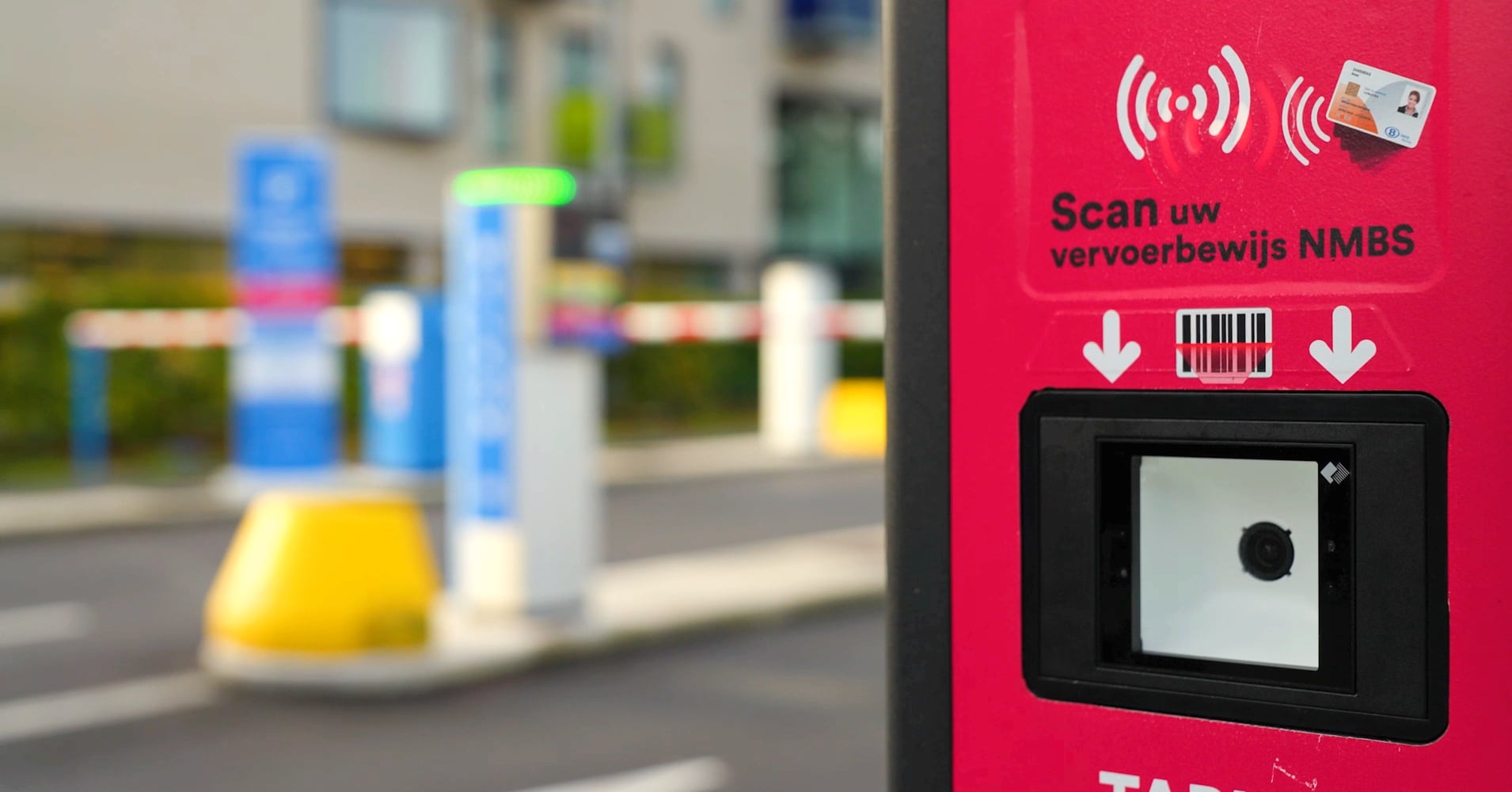
B-Parking operates 89 Park & Ride sites with over 23,000 parking spaces across Belgium — 97 lanes, 170 gates, 69 vending machines — operated completely cashless and managed.
Thanks to the fully centralized architecture developed jointly by SKIDATA and NMBS Holding, 89 car parks across an entire country are managed by only six people.
B-Parking and SKIDATA jointly developed a mobility pass that lets travelers enter a car park, take a train, or ride a bus in Brussels — all with one card. SKIDATA manages the parking and access side; the pass integrates with public transport to complete the multimodal journey. This is what it looks like when a parking platform is designed to feed into — not replace — a broader mobility ecosystem.

What SKIDATA Connect is — and what it isn't
SKIDATA Connect is not a Mobility-as-a-Service platform. It is not an app marketplace that links parking systems to third-party apps and calls that integration. It is an operational platform for parking and access management — providing access control, payment processing, partner APIs, enforcement workflows, reporting and analytics, monitoring and control, EV charging integration, and cybersecurity. It can be deployed on-premise or in the cloud.
A marketplace solves distribution: it connects more apps to more parking systems. But it doesn’t solve parking operations — consistent pricing rules, unified enforcement, one dashboard when a citizen complains, control over your own data. Unlike marketplace approaches that aggregate third-party apps on top of existing systems, SKIDATA Connect provides the operational layer beneath.
It is what allows Linköping to manage on-street and off-street as one system, Florence to connect 15 facilities under unified operations, Belgium to run 89 sites with six people, Amsterdam to integrate parking with a national entitlement system, and Benešov to turn parking into the adoption layer for a wider municipal services platform.
In Benešov, citizens use one Benefit Card to park, ride public electric buses, take the eco-train, access recycling centers, and use the swimming pool. The parking layer is not a standalone system; it is the operational foundation that makes the wider Smart City Card platform usable in everyday life.
Cities then connect SKIDATA Connect to their wider mobility ecosystem — transit systems, MaaS apps, city portals. SKIDATA doesn't try to replace those systems. It makes sure the parking and access layer works reliably, at scale, and feeds the right data to whatever sits above it.
What cities actually need
Urban planners don't evaluate parking technology by counting API connections. They ask: Can we enforce our zone rules automatically? Can we manage on-street and off-street as one system? Can we scale without multiplying our headcount? And can our parking platform feed reliable data into the broader mobility systems we're building?
SKIDATA Connect exists to answer these questions — not as a concept, but as proven infrastructure running in cities across Europe. From a UNESCO World Heritage city managing 15 million visitors, to a Swedish city unifying its entire parking landscape, to a national rail operator connecting 89 sites with six staff — the pattern is consistent. Cities that get the parking and access layer right build a foundation that the rest of their mobility strategy can rely on.
The technology exists today. The question is whether your city is ready to connect the pieces.
Further reading:
- SKIDATA Connect platform
- SKIDATA Zone Management solution
- Reference: Firenze Parcheggi
- Reference: Amsterdam Singelgrachtgarage
- SKIDATA Curb Management solution
- Reference: Linköping
- Reference: Benešov Smart City Solution Platform
- SKIDATA Mobility Hub solution
- White paper: The next wave of Mobility Hubs
- Blog: Mobility Hub 3.0
- Reference: NMBS Holding / B-Parking
- Blog: Cutting-edge mobility hubs
- Blog: Reducing congestion with smart parking solutions
Subscribe to our blog