


Buyer's Guide: Integrated Office Parking System vs Workplace Parking Software
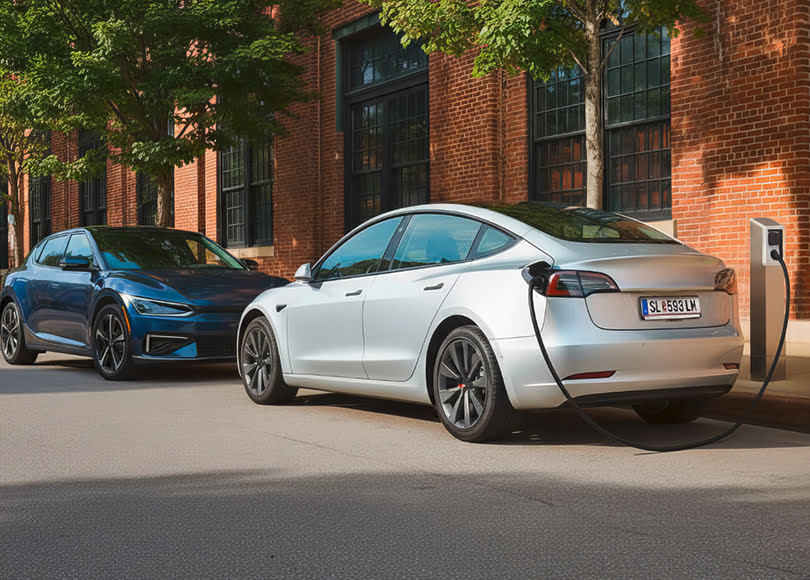
How digital curbside parking management with SKIDATA Connect helps cities reduce hardware costs, simplify enforcement, and make on-street parking visible, manageable, and secure.
A 22-year-old sales rep parks in your city center three times a week. She doesn't look for a meter. She opens an app, sees available zones, taps to start, pays with Apple Pay — the same way she buys coffee — taps to stop, and her company gets one monthly invoice.
If your city's on-street parking isn't in that app, she parks somewhere else — or she doesn't come at all. This isn't a generational quirk. It's the baseline expectation of anyone who manages their life on a phone — and of every business that manages expenses digitally.
For cities, on-street parking that isn't digitally visible is parking that underperforms: fewer sessions, less revenue, more disputes, and no data on how the curb is actually used.
The analog curb is expensive - and digital changes the math
Most European cities have digitalized off-street parking with LPR and ticketless systems. On-street, many still run on coin meters, paper permits, and patrol-based enforcement. That gap has a cost — and a digital alternative for every line item.
Hardware. Parking meters need to be purchased, installed, powered, maintained, repaired after vandalism, and cash-collected by armored vehicles on schedule. As digital parking app adoption grows, the share of sessions starting at a physical meter declines. SKIDATA Connect integrates with the largest mobile parking apps — EasyPark, ParkMobile, PayByPhone — so cities work with the apps drivers already have on their phones.
In Scandinavia and Poland, SKIDATA's own ePARK app serves as the native parking partner. Meters become optional, not mandatory. Cities can stop buying new ones.
Enforcement. Officers walking routes, checking meters, writing tickets by hand — it works, but it's labor-intensive and hard to scale. Digital doesn't mean city-wide surveillance. A blanket LPR camera network on every street is politically unrealistic for most municipalities, and rightly so. What digital does enable: an officer scans a plate with a handheld device, instantly sees whether there's an active session. Faster, fairer, fewer disputes, better coverage with the same team.
Permits. Paper applications, physical stickers, manual renewals — every change means admin work on both sides. When residents and businesses manage permits through an app or portal, that cost largely disappears.
Data. When on-street sessions run through a platform connected to off-street infrastructure via SKIDATA Connect, the city gets one source of truth — occupancy, revenue, peak times, compliance rates — instead of reconstructing the picture from meter cash counts and patrol logs.
The business parking problem nobody talks about
Every company with field staff, service technicians, or sales teams knows this pain: employees park on-street, pay at a meter, collect a receipt (or lose it), submit an expense report, and someone in finance processes the reimbursement. Hundreds of parking events per month, each one a small administrative cost that adds up.
Digital parking platforms can address this directly with business accounts: all parking charges across the company land on a single monthly invoice, license plates are self-registered, and parking and payment history is fully visible. No more paper receipts, no more travel expense forms, no more manual reimbursement processing. In Scandinavia and Poland, SKIDATA's ePARK app offers dedicated business packages with consolidated invoicing out of the box. In other markets, business account availability depends on the integrated local parking app.
For cities, business adoption drives volume. When parking is easy to expense, employees use it compliantly. More sessions, more revenue, fewer cars parked without active sessions.
The curb fight doesn't go away — but you can stop managing it blind
Residents, deliveries, shoppers, EVs, ride-hailing — all competing for the same strip of asphalt. No software resolves that contest. But most cities are managing it without data — unable to see how curb space is used, enforce rules consistently, or adjust based on evidence rather than complaints.
SKIDATA's Curb Management solution brings this digital layer to on-street parking. LPR digitalizes access, payment, and enforcement.
Drivers use their preferred parking app to see available zones, start and stop sessions, and pay automatically — SKIDATA Connect integrates with major platforms like EasyPark, ParkMobile, and PayByPhone. When on-street space is full, the system can guide drivers to nearby off-street facilities. Through SKIDATA Connect, the curb management system shares payment logic, enforcement data, and occupancy information with off-street infrastructure — one system, not two competing ones.
Digital payment means sensitive data - and that requires certified security
When a city moves parking payments to an app, it's handling license plates, payment credentials, session histories, and location data. Under GDPR, that's sensitive. Any municipality needs to know the digital layer is certified, not just claimed.
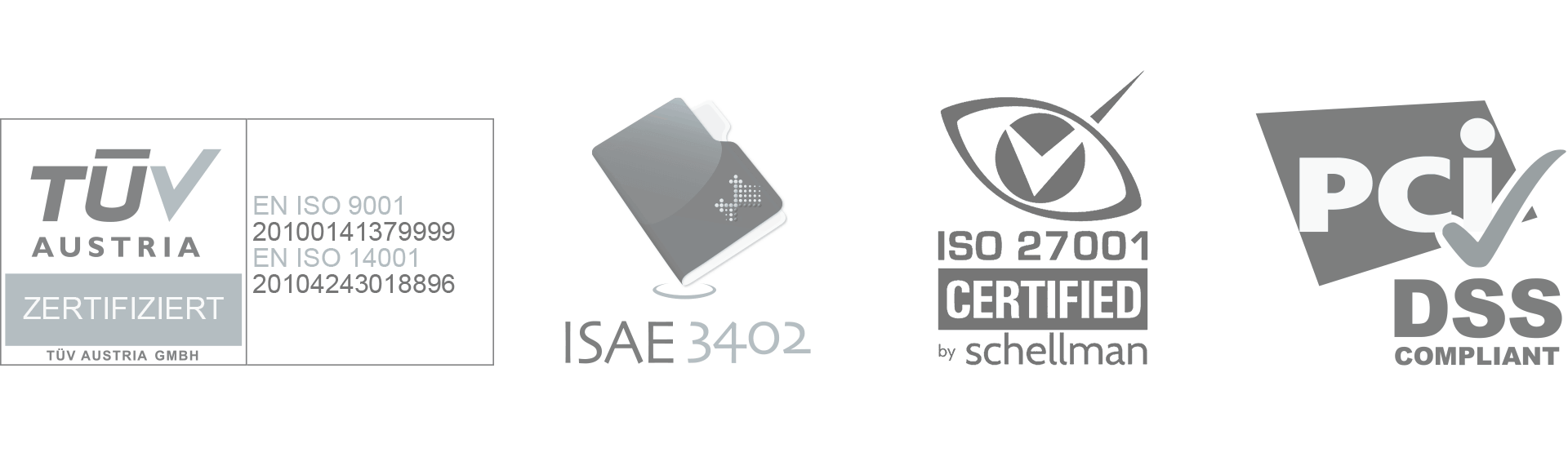
SKIDATA is ISO 27001, 27017, and 27018 certified for information security management, including cloud-specific security and protection of personal data. SKIDATA also holds ISAE 3402 certification, independently verifying that data processing and hosting meet international standards for internal controls — a detail that matters when municipal auditors ask questions.
Payment processing runs through a partnership with Adyen, providing end-to-end encryption across all channels through a single integration. Critically, this means cities can offer the payment methods people already use every day — Apple Pay, Google Pay, contactless cards, QR codes — without building separate integrations for each. The payment infrastructure is invisible to the user. That's the point.
This is the difference between a parking solution that a municipality's IT department can approve and one that gets stuck in procurement review for months.
Proof: Linköping - one city, one platform, one app
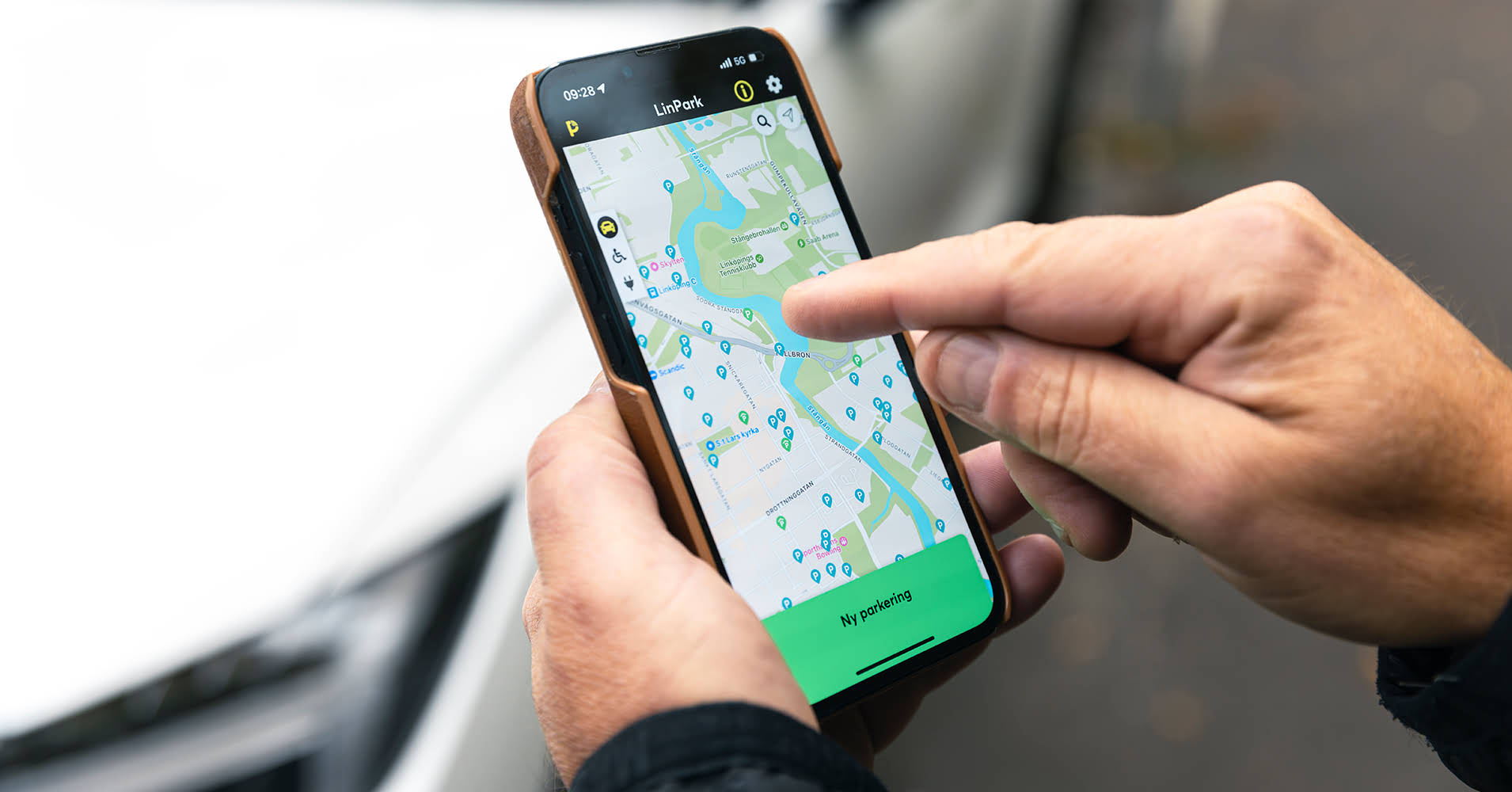
Linköping, partnering with Dukaten, deployed a city-wide platform that unifies on-street and off-street parking. The Linpark app — powered by SKIDATA Connect — serves as the single touchpoint across 18+ parking garages and on-street zones. Registration grants fully automatic parking. LPR eliminates physical tickets.
Critically, Linköping retains full control and security over all user-generated data. By building on SKIDATA Connect rather than relying on third-party platforms, the city eliminated external data dependencies — a strategic decision for any municipality navigating GDPR and digital sovereignty requirements.
Zone Management: from weeks to minutes
Deploying or adjusting parking zones has traditionally meant new signage, updated meter programming, and weeks of coordination. SKIDATA's Zone Management solution enables operators to create, price, and activate parking zones digitally in just two minutes. Changes in the back-end are instantly reflected in the back-office and the mobile app.
Cities can respond to events, construction, seasonal changes, or policy updates without the lead time that makes curb management feel rigid. SKIDATA's Zone Management solution (ePARK) has been nominated for the User Experience Award at Intertraffic Amsterdam 2026, recognized for transforming parking zone setup from a weeks-long project into a fast, simple interaction.
Further reading:
Subscribe to our blog