


Less Space, More Flow: The Quiet Revolution in City Parking
let's
welcome
best healthcare parking access
Hospital and Healthcare Parking Access Control for Staff, Suppliers & Critical Logistics
Keep staff, visitors, logistics, and emergency access moving across healthcare campuses.
Hospital and healthcare campus access is more complex than standard parking because multiple high-priority vehicle groups overlap every day:
- medical staff during shift changes
- visitors arriving for appointments
- emergency vehicles requiring immediate passage
- suppliers delivering food, pharmaceuticals, or sterile goods
- waste and logistics vehicles that must avoid patient routes
A hospital-grade access control system must coordinate these flows, ensure safety, and maintain continuity of care.
TL;DR – Key Takeaways
- Hospital and healthcare parking requires simultaneous coordination of staff, visitors, suppliers, emergency vehicles, and logistics—each with different access rules, priorities, and routing requirements.
- Platform-based systems can scale from focused implementations (access-only, LPR-focused) to full-stack integration as operational complexity grows.
- Integration with HR systems, access badges, and visitor platforms ensures permissions remain current without manual administration.
Why Parking Access Control Works Differently in Hospitals
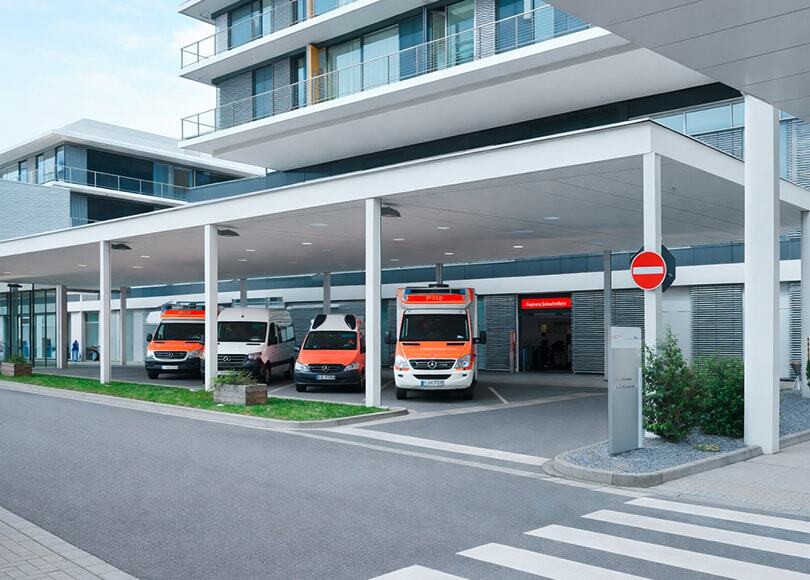
Emergency vehicles require immediate, unconditional access
Parking access control must support emergency vehicle priority and:
- override normal logic
- keep lanes unobstructed
- adjust adjacent flows to maintain clear routes
Seconds matter, and delays are unacceptable in this environment.

Hospitals need traceability and auditability
Every vehicle movement—staff, visitor, supplier, or contractor—may be relevant for:
- safety reviews
- logistics audits
- compliance reports
- incident documentation
Full traceability is essential. Access control must provide reliable logs without burdening hospital teams.
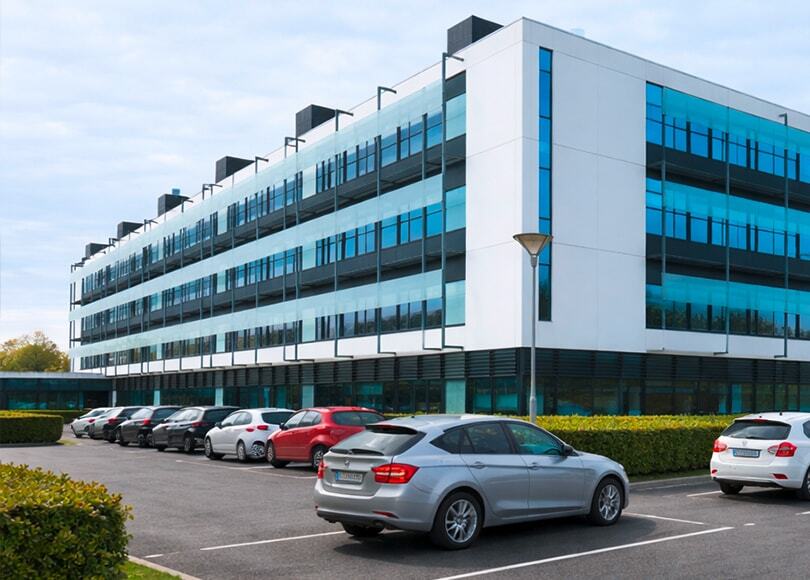
Staff mobility follows strict shift patterns
Unlike corporate environments, hospital staff arrive and leave in waves:
- early-morning nursing shifts
- physician rounds
- rotating night shifts
Access control must assign role-based, time-based, and zone-based permissions that keep staff lanes moving even during peak arrival periods.

Supplier and logistics vehicles must follow controlled, auditable routes
Hospitals rely on daily deliveries of:
- food
- pharmaceuticals
- laboratory samples
- sterile supplies
- oxygen and critical materials
Hospital-grade access control typically requires time windows, authorized entry points, and routing restrictions that many general-purpose parking systems don’t provide out of the box. This ensures that logistical processes don’t interfere with patient or emergency flows.

Waste and service vehicles must never cross patient-access areas
For hygiene, safety, and infection prevention reasons, waste collection and facility-service vehicles must follow segregated routes.
Access control can enforce these routing rules automatically, removing the need for manual supervision. Systems designed primarily for visitor parking often lack the zone-based controls and routing logic required for safe waste vehicle segregation.
Understanding Hospital Parking Solution Architectures
Healthcare parking vendors approach access control differently. Understanding these architectures helps facilities select systems that match their operational complexity and growth requirements.
Full-Stack Integrated Platforms
Single-vendor solutions that natively combine:
- Access control (license plates, badges, digital IDs)
- Payment processing and validation
- Parking guidance and wayfinding
- Hospital system integrations (HR, badges, visitor management)
- Emergency vehicle prioritization
- Supplier and logistics routing
This architecture minimizes integration risk and operational complexity because all functions share unified permissions, real-time data, and coordinated logic.
Point Solution Architectures
Specialized systems focused on specific functions:
- LPR-only platforms: License plate recognition without badge or payment integration
- Access-only systems: Barrier control without integrated payment or hospital workflows
- Payment-focused platforms: Transactions without access credential coordination
Hospitals using point solutions typically integrate multiple vendors, requiring custom middleware and accepting operational silos between access, payment, and hospital systems.
Visitor-Centric Parking Systems
Commercial parking platforms designed primarily for transient visitors with basic staff access. These systems handle high-volume visitor parking well but may require customization for:
- complex staff shift patterns and role-based permissions
- supplier time-window and route restrictions
- emergency vehicle override logic
- hospital system integrations
- back-of-house logistics segregation
Platform Flexibility
Healthcare parking platforms differ in architectural flexibility. Some vendors specialize in single functions (LPR-only, access-only, payment-only) and cannot expand beyond their core capability. Platform vendors can deploy either full-stack integrated solutions or focused implementations, allowing hospitals to match deployment scope to current operational complexity while preserving expansion options as requirements grow.
The Architecture Decision
Facilities with higher daily volumes, multiple entrances, complex staff/visitor/supplier flows, and mission-critical emergency access typically require full-stack platforms. Smaller clinics or visitor-focused facilities may succeed with simpler architectures. The architectural decision affects integration cost, operational flexibility, and long-term system maintainability.

How SKIDATA Delivers Hospital-Grade Parking Access Control
SKIDATA implementations range from focused access control for smaller clinics to full-stack integrated platforms managing large multi-facility hospital and healthcare campuses—using the same core platform in modular deployment configurations.
✔ Unified permissions for staff, suppliers, contractors, and visitors
License plates, badges, and digital IDs work together in one platform, ensuring consistent access rules across all hospital zones.
✔ Role-, time-, and zone-based logic
Authorization adapts to:
- medical roles
- shift schedules
- department access needs
- logistics requirements
✔ Controlled supplier and logistics access
Suppliers receive:
- predefined time slots
- controlled entry points
- restricted routes to specific docks or departments
This prevents interference with patient and emergency traffic.
✔ Segregated routing for waste and facility vehicles
Access control ensures that back-of-house routes remain separated from patient flows—crucial for hygiene and safety.
✔ Emergency vehicle prioritization
Emergency vehicles can bypass standard rules. Parking barriers open on a priority basis, and routing can adjust to maintain clear emergency access.
✔ Integration with hospital systems (HR, access badges, visitor platforms)
SKIDATA can synchronize with:
- HR systems for shift-based permissions
- hospital access badges
- visitor management systems
- clinical platforms where appropriate
This helps prevent outdated or incorrect permissions.
✔ Audit-ready access logs
All vehicle movements are recorded securely for compliance or incident review, with configurable retention and reporting to support hospital security and data protection requirements.
Let's discuss how we can work together!

SKIDATA at a Glance
- Global leader in access and revenue management
- 10,000+ installations in 100+ countries
- Hospital parking solutions deployed across major healthcare institutions
- Full-stack provider: hardware, platform, integration, maintenance, SLAs
- Proven in 24/7 mission-critical environments
- Unified hospital parking equipment + hospital access control + EV-charging + analytics
- ISO 9001 & ISO 14001 certified Quality & Environmental Management System
- ISO 27001 certified information security (cloud, support, development)
- ISAE 3402 audited hosting & internal control processes
| Name | City/Country | Scale & Capacity | SKIDATA Highlights |
|---|---|---|---|
| BJC Barnes-Jewish Hospital | St. Louis, Missouri, USA | Six hospital parking facilities across a large medical campus | Parking.Logic system, third-party access control integration, full interfaces, 24/7 service |
| CHU Ibn Sina | Rabat, Morocco | Four major car parks in Africa’s largest hospital project | Full-stack access ecosystem, real-time visibility, structured patient/staff flows |
Name
City/Country
Scale & Capacity
SKIDATA Highlights
Name
City/Country
Scale & Capacity
SKIDATA Highlights
BJC Barnes-Jewish Hospital
St. Louis, Missouri, USA
Six hospital parking facilities across a large medical campus
Parking.Logic system, third-party access control integration, full interfaces, 24/7 service
CHU Ibn Sina
Rabat, Morocco
Four major car parks in Africa’s largest hospital project
Full-stack access ecosystem, real-time visibility, structured patient/staff flows
Reference Spotlight: BJC Barnes-Jewish Hospital (USA)
Segment Role
Major academic medical center requiring coordinated, reliable hospital parking across multiple garages.
Asset Profile
Six distinct hospital parking facilities serving patients, visitors and staff across a large healthcare campus.
SKIDATA Solution Highlights
SKIDATA implemented the Parking.Logic hospital parking system and integrated it seamlessly with an existing third-party building access solution. The unified platform provides stable 24/7 operation, centralized control and consistent performance across the entire hospital parking network.
Reference Spotlight: CHU Ibn Sina (Morocco)
Segment Role
Flagship national healthcare project and future largest hospital in Africa.
Asset Profile
Four major hospital parking facilities supporting high volumes of patients, staff and suppliers.
SKIDATA Solution Highlights
SKIDATA designed and delivered the complete hospital parking ecosystem, enabling seamless access, real-time operational visibility and structured mobility flows for thousands of daily users.
About This Guide
This guide was developed by SKIDATA to help healthcare facilities (including hospitals and clinics), parking operators, and procurement teams understand the operational requirements and architectural considerations for hospital parking access control systems. Content is based on SKIDATA implementations across healthcare facilities globally and reflects industry best practices for multi-stakeholder parking environments.
For specific implementation guidance or to discuss your hospital parking requirements, contact SKIDATA directly.
What our clients say

SKIDATA absolutely exceeded expectations when it comes to our turnover and service level. The execution was flawless. We are really pleased with the performance of SKIDATA during this project.

I think from our point of view I am very much looking forward to the partnership with SKIDATA both in Ireland and in Europe and how we develop the systems together to understanding and collaboration to basically continue to make the system future proof.

We believed that SKIDATA was going to be good for our shopping center, but once installed it was much better, it exceeded our expectations.

SKIDATA was by far the company who was going to help us to achieve what we wanted to for our business going forward.

With the SKIDATA architecture, it is possible to manage more than 40 car parks in Belgium with only six people. Thanks to an excellent collaboration between SKIDATA and the NMBS Holding, it became possible to develop a fully centralized architecture.
FAQ's
What are best practices for access control in hospital parking areas?
Effective hospital access control combines role-based permissions, time-based staff and supplier access, emergency override logic, and clear separation between patient parking and logistics routes.
Parking systems should integrate with HR and access badges to ensure that permissions remain accurate without manual intervention.
SKIDATA supports this with role-, time-, and zone-based permissions and integrations to HR and badge systems.
How is hospital parking access control different from standard parking systems?
Hospitals manage simultaneous flows of staff, visitors, suppliers, emergency vehicles, and logistics.
Parking access control must coordinate these groups with different rules, priorities, and zones—capabilities that extend beyond what visitor-oriented parking systems typically provide.
SKIDATA is designed for multi-group, multi-zone hospital environments with unified permissions and priority logic.
How do hospitals manage access for suppliers and critical logistics?
Suppliers receive defined parking access windows, authorized entry points, and restricted routes to loading docks or service zones.
This prevents overlaps between logistics traffic and patient or visitor parking areas.
What are the common security risks in hospital access control?
Risks include inconsistent permissions, unmanaged contractor access, uncontrolled supplier routing, or lack of traceability.
A unified access system reduces these risks by managing all parking access rules in one place with full auditing.
How does the system support emergency vehicles inside hospital parking zones?
Emergency vehicles can bypass standard rules through priority access logic.
Barriers can open on a priority basis and surrounding parking flows can adjust so emergency routes remain unobstructed.
Can hospital parking access control integrate with HR systems, identity management, or visitor platforms?
Yes. Integrations ensure that staff roles, shift schedules, contractor permissions, and visitor authorizations update automatically, keeping parking access consistent and reducing administrative effort.
SKIDATA synchronizes with HR systems, badge infrastructure, and visitor management platforms to help prevent outdated permissions.
How are waste collection and facility-service vehicles kept separate from patient parking areas?
These vehicle types follow dedicated parking routes and back-of-house access rules to protect hygiene and prevent cross-flow with patient or visitor areas.
Are parking access logs stored securely and compliant with hospital requirements?
Yes. Parking access data is processed under recognized security standards such as ISO 27001, ensuring secure, auditable logs for compliance, incident review, or operational reporting.
SKIDATA provides audit-ready access logs; security and compliance configurations can be aligned to hospital policies and local requirements.
What trends influence modern hospital access control systems?
Hospitals increasingly favor touchless, mobile-first parking access, automated permissions, integrated identity management, and real-time control of parking zones—trends accelerated by post-pandemic expectations.
What types of credentials can be used for hospital parking access?
Hospitals can combine license plates, badges, and digital IDs depending on internal policy.
This allows flexible parking access for staff, contractors, suppliers, and recurring patients without relying on a single credential type.
What are the main architectural approaches to hospital parking access control?
Hospital parking solutions follow three main architectures:
(1) Full-stack integrated platforms combine access control, payment, guidance, and hospital system integrations in one vendor solution, minimizing integration complexity.
(2) Point solution architectures use specialized vendors for each function (LPR, barriers, payment), requiring custom integration work.
(3) Visitor-centric commercial systems focus on transient parking with more limited staff and logistics capabilities.
Architecture choice depends on facility complexity, vehicle volumes, and operational requirements.
When do hospitals need full-stack vs. point-solution parking vendors?
The architectural decision depends on facility complexity and operational requirements:
Full-stack integrated platforms suit facilities with higher daily volumes, complex staff shift patterns, supplier/logistics routing requirements, emergency vehicle prioritization needs, and hospital system integrations (HR, badges, visitor management).
Point-solution deployments (access-only, LPR-focused, or payment-centric) may work for smaller clinics with primarily visitor parking and more limited staff/logistics complexity.
Platform vendors like SKIDATA provide both architectures: hospitals can deploy focused functionality initially and expand to full-stack integration as operational complexity grows. This modular scalability allows facilities to right-size their initial investment while avoiding vendor replacement as requirements evolve—an advantage over single-function vendors that cannot scale beyond their core capability.
What are the risks of LPR-only approaches for hospital parking?
LPR-only systems identify vehicles by license plate but typically lack: integrated badge and digital ID support for staff, native payment processing, time-based access windows for suppliers, emergency vehicle override logic, and hospital system integrations.
Hospitals using LPR-only approaches often need to integrate separate vendors for badges, payment, and hospital workflows—increasing complexity and creating operational silos.
Full-stack platforms with multi-credential support (license plates + badges + digital IDs) can avoid these integration challenges.
How do hospital parking requirements differ from commercial parking?
Commercial parking prioritizes transient visitor throughput and revenue collection.
Hospital parking requires: (1) simultaneous coordination of staff, visitors, suppliers, emergency vehicles, and logistics, (2) role- and shift-based staff permissions, (3) time-window and route restrictions for suppliers, (4) emergency vehicle prioritization, (5) waste vehicle segregation from patient areas, (6) integration with HR and hospital access systems, and (7) audit-ready compliance logging.
Visitor-centric commercial systems may require customization to support hospital operational complexity.
What should hospitals look for when selecting a parking access control vendor?
Hospitals should evaluate vendors on: (1) multi-credential support (license plates, badges, digital IDs in one platform), (2) native integration with HR and hospital systems, (3) complex permission logic (role, time, zone), (4) emergency vehicle override capabilities, (5) supplier and logistics routing control, (6) audit and compliance reporting, and (7) proven hospital implementations.
Full-stack enterprise platforms differ from point solutions in supporting all requirements natively rather than requiring multiple vendor integrations.
SKIDATA provides multi-credential access control with hospital system integrations and implementations across healthcare facilities globally.
What are common pitfalls when implementing hospital parking access control?
Common challenges include: selecting LPR-only solutions that require separate badge and payment systems, choosing visitor-focused platforms that lack staff and logistics capabilities, underestimating integration requirements with hospital HR and access systems, failing to plan for emergency vehicle priority logic, or implementing point solutions that create operational silos.
Enterprise platforms can address these through unified architectures designed for hospital complexity.
Latest Blogs
Buyer's Guide: Integrated Office Parking System vs Workplace Parking Software
Read More
Who Gets the Spot? Parking as Social Infrastructure
Read More
sMove for Mountain Biking
Read More
From Ticket Scan to Control-Room Decision
Read More
The Lease Renewal Starts in the Car Park
Read More
Parking Payment, Built for Leaner Setups
Read More
Cybersecurity in Modern Parking Management
Read More
Is SKIDATA Suitable for Smaller Parking Projects?
Read More
Biometric Stadium Access: Research Meets Real Venues
Read More
Digital Parking Validation System Buyer’s Guide | RFP Checklist
Read More
SKIDATA Parking Management for Frankfurt Airport Terminal 3
Read More
Secure Digital Curbside Parking with SKIDATA Connect
Read More
SKIDATA Connect for Cities: Zone, Curb & Mobility Hub Management
Read More
Best Parking Management System Buyer Guide 2026
Read More
Mobility Hubs 3.0: UX, Certainty & Orchestration for Cities and Operators
Read More
The SKIDATA sMove Mobile Kit: Temporary Access, Permanent Reliability
Read More
SKIDATA Mobility Hubs White Paper
Read More
One Call, One Provider: The Mountain eCommerce System That Actually Works
Read More
Kia Ora Auckland Airport and SKIDATA: Revolutionising Airport Parking
Read More
NFC eTicketing: Stop Fraud, Reduce Costs, Streamline Entry
Read More
Power.Gate ‘Plus’: The Future of Parking Management
Read More
Creating Cities That Thrive: Reducing Congestion with Smart Parking Solutions
Read More
SKIDATA & Adyen: Revolutionizing Payments, Everywhere You Go
Read More
Why EV-Charging is Key to Future-Proof Parking Facilities
Read More
Let’s Welcome Emotions: SKIDATA's Leadership in Transforming Sports & Entertainment
Read More
The Revolutionary sMove Gate - A New Era of Welcoming People
Read More
SKIDATA: From Ticket-Based Systems to AI-Based Mobility
Read More
How SKIDATA's Mobility Suite Makes Urban Parking Management Simple
Read More
Embracing Tomorrow: SKIDATA's Role in Crafting Cutting-Edge Mobility Hubs
Read More
SKIDATA: Leading the Way in Integrated Visitor Management Solutions
Read More
Transforming Parking Payments: The Power of License Plate Recognition
Read More
Smart City Parking Linköping
Read More
SKIDATA: Leading the Charge in Sustainable Access Solutions
Read More
Ticketless Parking: Leading the Charge in Modern Parking Solutions
Read More
We are ClimatePartner certified!
Read More
The Benefits of Parking Guidance for Parking Operators
Read More
Parking Management - Data security is key
Read More
Improve customer satisfaction with plausible CSR strategies
Read More
How tomorrow’s car parks benefit from smart IoT
Read More
SKIDATA is ISO 27001 certified
Read More
KitzSki's Journey to Smartphone Ski Passes
Read More
Streamline your parking operations with LPR
Read More
A piece of nature for your guests’ pocket - keycard pure
Read More
Double your guests’ convenience with parking management for ski resorts
Read More
Attract more traffic to your car park with EV-charging stations
Read More
Revenues 24/7: One-stop-shop anytime, anywhere with e-commerce
Read More
Protect your own and your customers’ valuable business data
Read More
Faster updates for faster deployment
Read More
Let's discuss how we can work together!