


Buyer's Guide: Integrated Office Parking System vs Workplace Parking Software
let's
welcome
best healthcare parking guidance
Why Parking Guidance & Signage Matter in Hospitals
1. Visitors often arrive under stress or time pressure
Families, elderly visitors, and outpatients benefit from clear directions to:
- the correct clinical building,
- drop-off and short-stay areas,
- accessible parking spaces,
- departments with high patient turnover (imaging, oncology, maternity).
Good guidance reduces uncertainty and supports calmer arrivals.
2. Hospitals must avoid congestion near entrances and clinical access points
Shift changes, visiting hours and appointment blocks can create sudden peaks in circulation.
Digital signage allows hospitals to:
- direct vehicles to less congested zones,
- adjust routing dynamically,
- highlight available spaces close to key departments,
- keep emergency routes unobstructed.
3. Staff and contractors need separate routing to maintain predictable flows
Staff entrances, logistics access roads and supplier docks must be kept distinct from visitor areas.
Guidance ensures staff and logistics vehicles follow defined paths without interfering with patient access.
4. Large hospitals require clear internal navigation inside multi-level structures
Multi-level garages and interconnected buildings make it easy for visitors to lose orientation.
Guidance systems help distribute vehicles efficiently and prevent unnecessary circulation.
5. Visitors returning to their car benefit from simple, clear wayfinding
Hospitals can assist visitors by allowing them to check where they parked using:
- a payment terminal,
- their license plate number,
- digital signage that highlights the relevant sector or level.
This reduces confusion and shortens the exit process.
How SKIDATA Supports Hospital-Grade Parking Guidance & Digital Signage
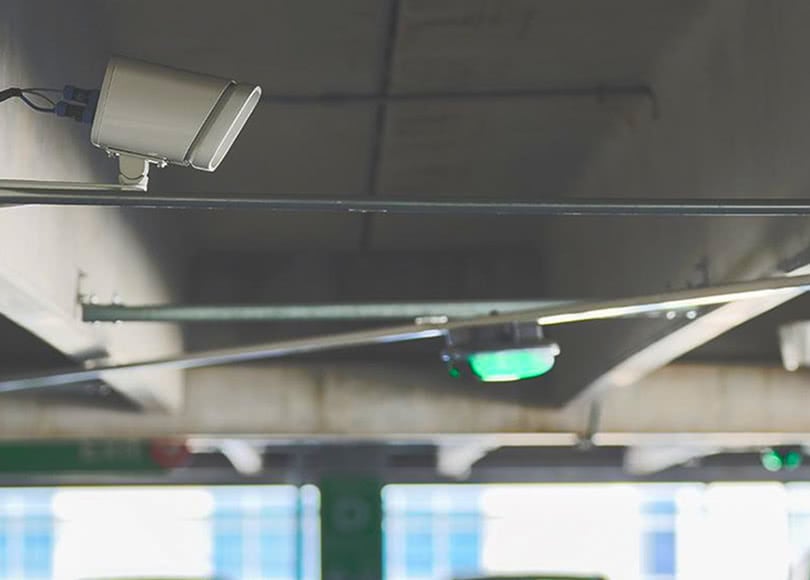
✔ Dynamic routing for patient, visitor and staff flows
Real-time occupancy data helps route vehicles to the most suitable areas, improving punctuality for clinical appointments and reducing pressure at hospital entrances.
✔ Guidance for EV-charging availability and special zones
Digital signs can show:
- free charging points,
- short-term zones,
- accessible parking,
- areas reserved for clinical departments or specific events.
✔ Adaptable digital signage for changing conditions
Hospitals can display:
- open/closed zones,
- expected occupancy,
- temporary routing changes,
- information for special events or clinical programs.
Messages can be updated centrally.

✔ Integration with LPR, access control, validations and monitoring
Guidance draws from the same unified data pool as:
- access control permissions,
- LPR recognition,
- validation rules,
- monitoring & control,
- EV-charging usage.
This ensures consistent, accurate information across the campus.
✔ Support for multi-site hospital environments
Hospitals with multiple buildings or satellite centers can use shared guidance logic while still adapting communication to local conditions.
✔ Car-finder support for visitor departures
Visitors can type their license plate number at a kiosk and receive the location of their parked vehicle, helping reduce confusion and shortening exit times.
Let's discuss how we can work together!

SKIDATA at a Glance
- Global leader in access and revenue management
- 10,000+ installations in 100+ countries
- Hospital parking solutions deployed across major healthcare institutions
- Full-stack provider: hardware, platform, integration, maintenance, SLAs
- Proven in 24/7 mission-critical environments
- Unified hospital parking equipment + hospital access control + EV-charging + analytics
- ISO 9001 & ISO 14001 certified Quality & Environmental Management System
- ISO 27001 certified information security (cloud, support, development)
- ISAE 3402 audited hosting & internal control processes
| Name | City/Country | Scale & Capacity | SKIDATA Highlights |
|---|---|---|---|
| BJC Barnes-Jewish Hospital | St. Louis, Missouri, USA | Six hospital parking facilities across a large medical campus | Parking.Logic system, third-party access control integration, full interfaces, 24/7 service |
| CHU Ibn Sina | Rabat, Morocco | Four major car parks in Africa’s largest hospital project | Full-stack access ecosystem, real-time visibility, structured patient/staff flows |
Name
City/Country
Scale & Capacity
SKIDATA Highlights
Name
City/Country
Scale & Capacity
SKIDATA Highlights
BJC Barnes-Jewish Hospital
St. Louis, Missouri, USA
Six hospital parking facilities across a large medical campus
Parking.Logic system, third-party access control integration, full interfaces, 24/7 service
CHU Ibn Sina
Rabat, Morocco
Four major car parks in Africa’s largest hospital project
Full-stack access ecosystem, real-time visibility, structured patient/staff flows
Reference Spotlight: BJC Barnes-Jewish Hospital (USA)
Segment Role
Major academic medical center requiring coordinated, reliable hospital parking across multiple garages.
Asset Profile
Six distinct hospital parking facilities serving patients, visitors and staff across a large healthcare campus.
SKIDATA Solution Highlights
SKIDATA implemented the Parking.Logic hospital parking system and integrated it seamlessly with an existing third-party building access solution. The unified platform provides stable 24/7 operation, centralized control and consistent performance across the entire hospital parking network.
Reference Spotlight: CHU Ibn Sina (Morocco)
Segment Role
Flagship national healthcare project and future largest hospital in Africa.
Asset Profile
Four major hospital parking facilities supporting high volumes of patients, staff and suppliers.
SKIDATA Solution Highlights
SKIDATA designed and delivered the complete hospital parking ecosystem, enabling seamless access, real-time operational visibility and structured mobility flows for thousands of daily users.
What our clients say

SKIDATA absolutely exceeded expectations when it comes to our turnover and service level. The execution was flawless. We are really pleased with the performance of SKIDATA during this project.

I think from our point of view I am very much looking forward to the partnership with SKIDATA both in Ireland and in Europe and how we develop the systems together to understanding and collaboration to basically continue to make the system future proof.

We believed that SKIDATA was going to be good for our shopping center, but once installed it was much better, it exceeded our expectations.

SKIDATA was by far the company who was going to help us to achieve what we wanted to for our business going forward.

With the SKIDATA architecture, it is possible to manage more than 40 car parks in Belgium with only six people. Thanks to an excellent collaboration between SKIDATA and the NMBS Holding, it became possible to develop a fully centralized architecture.
FAQ's
What is dynamic digital parking wayfinding, and how does it work in a hospital environment?
Dynamic wayfinding uses real-time occupancy information to route vehicles to suitable parking areas.
In hospitals, this helps patients, visitors, staff and logistics vehicles follow clear, predictable routes and reduces time spent searching for a space.
How can digital signage support emergency vehicle access at hospitals?
Digital signs can highlight priority routes, show temporary access restrictions and redirect visitor traffic away from emergency lanes when volumes increase.
Hospitals use this to help maintain clear access for ambulances and patient transport vehicles.
Can hospital parking guidance systems integrate with existing security or facility systems?
Yes.
Guidance systems can share occupancy, routing and status data with facility or operations teams, depending on hospital policy and system configuration.
This supports coordinated responses during peak periods or incidents.
What factors influence the return on investment for a hospital parking guidance & signage system?
Key factors include reduced search time for visitors, smoother traffic flow near clinical entrances, improved utilisation of parking areas and more efficient staff or logistics routing.
Operational benefits often come from better visibility rather than hardware alone.
What is the difference between ultrasonic and camera-based guidance for hospital garages?
Ultrasonic sensors typically focus on individual-space detection, while camera-based systems can provide a broader view of occupancy and movement.
Hospitals choose based on layout, lighting, installation conditions and how much contextual information is needed for operational decisions.
How can hospitals manage staff and visitor zone changes using digital signage?
Digital signage can reflect zone availability, temporary closures or peak-time routing adjustments.
Hospitals can update messages centrally to guide staff and visitors to the most appropriate areas.
How does parking guidance support accessibility requirements in hospital parking?
Guidance systems can help direct visitors to accessible parking areas and provide clear information about available spaces.
Any accessibility policies or compliance requirements remain defined by local regulations and hospital guidelines.
What challenges do hospitals and healthcare facilities face when guiding vehicles in multi-level or multi-building parking environments?
Large campuses often involve multiple garages, mixed traffic flows and varying demand by department.
Guidance helps by distributing vehicles more evenly, reducing unnecessary circulation and keeping key entrances from becoming congested.
How can digital signage improve the patient and visitor experience?
Clear, timely guidance reduces stress for first-time visitors, patients arriving for scheduled treatments and families navigating large campuses.
Less time spent searching for parking can lead to smoother arrivals and improved punctuality.
How do hospitals approach the upgrade from static signage to dynamic guidance systems?
Hospitals typically begin with real-time occupancy displays, then expand to routing, zone messaging and integrated digital signage.
A phased approach helps introduce guidance features without disrupting daily operations.
Latest Blogs
Who Gets the Spot? Parking as Social Infrastructure
Read More
sMove for Mountain Biking
Read More
From Ticket Scan to Control-Room Decision
Read More
The Lease Renewal Starts in the Car Park
Read More
Parking Payment, Built for Leaner Setups
Read More
Cybersecurity in Modern Parking Management
Read More
Is SKIDATA Suitable for Smaller Parking Projects?
Read More
Biometric Stadium Access: Research Meets Real Venues
Read More
Digital Parking Validation System Buyer’s Guide | RFP Checklist
Read More
SKIDATA Parking Management for Frankfurt Airport Terminal 3
Read More
Secure Digital Curbside Parking with SKIDATA Connect
Read More
SKIDATA Connect for Cities: Zone, Curb & Mobility Hub Management
Read More
Best Parking Management System Buyer Guide 2026
Read More
Mobility Hubs 3.0: UX, Certainty & Orchestration for Cities and Operators
Read More
The SKIDATA sMove Mobile Kit: Temporary Access, Permanent Reliability
Read More
SKIDATA Mobility Hubs White Paper
Read More
One Call, One Provider: The Mountain eCommerce System That Actually Works
Read More
Kia Ora Auckland Airport and SKIDATA: Revolutionising Airport Parking
Read More
NFC eTicketing: Stop Fraud, Reduce Costs, Streamline Entry
Read More
Power.Gate ‘Plus’: The Future of Parking Management
Read More
Creating Cities That Thrive: Reducing Congestion with Smart Parking Solutions
Read More
SKIDATA & Adyen: Revolutionizing Payments, Everywhere You Go
Read More
Why EV-Charging is Key to Future-Proof Parking Facilities
Read More
Let’s Welcome Emotions: SKIDATA's Leadership in Transforming Sports & Entertainment
Read More
The Revolutionary sMove Gate - A New Era of Welcoming People
Read More
SKIDATA: From Ticket-Based Systems to AI-Based Mobility
Read More
How SKIDATA's Mobility Suite Makes Urban Parking Management Simple
Read More
Embracing Tomorrow: SKIDATA's Role in Crafting Cutting-Edge Mobility Hubs
Read More
SKIDATA: Leading the Way in Integrated Visitor Management Solutions
Read More
Transforming Parking Payments: The Power of License Plate Recognition
Read More
Smart City Parking Linköping
Read More
SKIDATA: Leading the Charge in Sustainable Access Solutions
Read More
Ticketless Parking: Leading the Charge in Modern Parking Solutions
Read More
We are ClimatePartner certified!
Read More
The Benefits of Parking Guidance for Parking Operators
Read More
Parking Management - Data security is key
Read More
Improve customer satisfaction with plausible CSR strategies
Read More
How tomorrow’s car parks benefit from smart IoT
Read More
SKIDATA is ISO 27001 certified
Read More
KitzSki's Journey to Smartphone Ski Passes
Read More
Streamline your parking operations with LPR
Read More
A piece of nature for your guests’ pocket - keycard pure
Read More
Double your guests’ convenience with parking management for ski resorts
Read More
Attract more traffic to your car park with EV-charging stations
Read More
Revenues 24/7: One-stop-shop anytime, anywhere with e-commerce
Read More
Protect your own and your customers’ valuable business data
Read More
Faster updates for faster deployment
Read More
Let's discuss how we can work together!