



The future of access is about human behaviour. For years the industry has focused on speed. Faster entry. Faster payment. Faster validation. Faster throughput. And this is valid.
Every new generation of technology is designed to remove friction. Better scanners. Better barriers. Better ticketing systems. Better apps. Better automation. And yet, despite all this advancement, most people still experience frustration when they arrive somewhere. Not because the system is broken. But because the experience still feels difficult. The future of access is no longer about moving people faster. It is about making people feel more certain. And there is a massive difference between the two.
What is the invisible queue?
Walk through a busy airport during peak travel season. Watch people entering a shopping centre on a Saturday morning. Look at a packed stadium before kickoff. Observe a driver approaching a parking facility they have never used before.
Something interesting happens almost every single time.
People hesitate.
Not because the hardware failed. Not because the barrier didn’t open. Not because the system stopped working.
They hesitate because they are unsure.
Which lane do I use?
Do I tap here?
Is this ticketless?
Will the system recognise my number plate?
Do I need an app?
Where do I pay?
What happens if this doesn’t work?
That moment, however small, is friction.
And in modern environments, friction is increasingly psychological rather than physical. The actual queue is often no longer the biggest problem. The invisible queue is. The hesitation. The uncertainty. The mental processing. The delay caused by confusion instead of congestion. That is where the next evolution of access technology is happening.
How is seamless access measured?
Traditionally, the industry has measured success through operational metrics.
Vehicles per hour. Barrier cycle times. Transaction speeds. Occupancy levels. Validation rates. All important. But none of those metrics truly measure how people feel when moving through an environment. And that matters far more than many operators realise. Because people don’t experience infrastructure the way engineers design it.
They experience it emotionally, especially under pressure. At airports, people are stressed before they even arrive. At stadiums, excitement creates urgency and unpredictability. At retail destinations, convenience directly impacts spending behaviour.
In cities, movement has become increasingly layered and complex.
The user does not care how sophisticated the infrastructure is behind the scenes. They care whether the experience feels effortless. The most technically advanced parking system in the world can still feel frustrating if users have to stop and think. The conversation is moving toward behavioural design.
Human-centric access
We need to understand human behaviour. The best systems reduce decision fatigue and the best access experience is the one people barely notice because it feels natural. A driver should not have to analyse the environment before entering it. A visitor should not feel uncertain about what happens next. A customer should not need a manual to park, enter, validate, pay, or leave. The system should quietly guide the experience in the background.
Invisible when it works.
Powerful when needed.
Reliable under pressure.
That is true frictionless access.
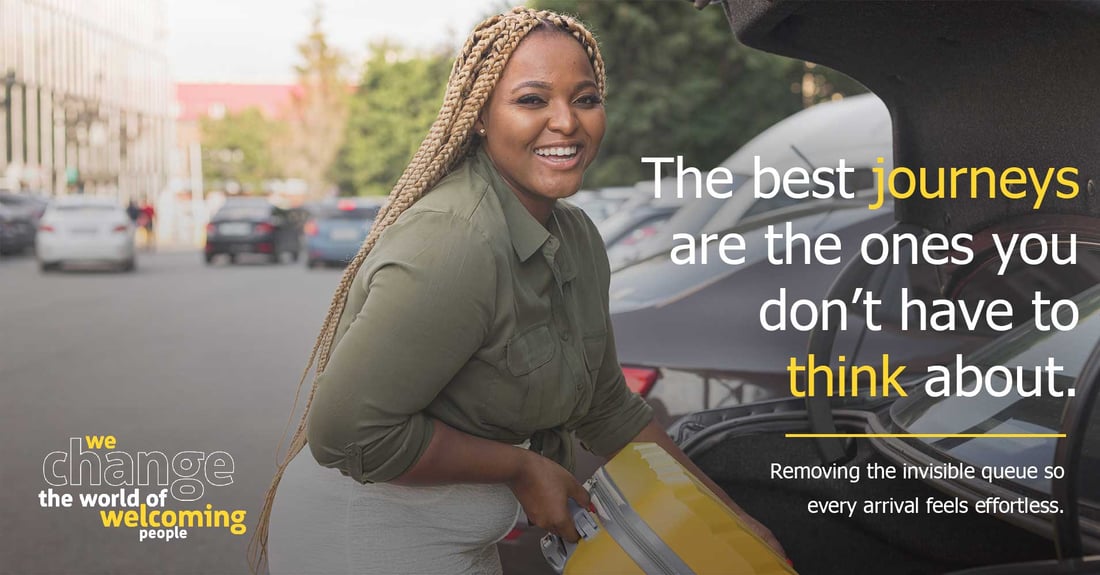
SKIDATA operates this level of ecosystem thinking and for Middle East, India and Africa, it is incredibly key since this region does not operate under simple conditions. It operates under complexity. And complexity exposes the truth very quickly.
The Middle East is building some of the world’s most ambitious destination infrastructure at extraordinary speed.
India is operating at scale levels that force systems to perform continuously under immense volume.
South Africa & Africa often requires infrastructure to remain reliable under unpredictable operating conditions and varying connectivity realities.
Turkey and North Africa sit between legacy infrastructure and rapid digital transformation.
These are complex environments, which is precisely why they matter. Because systems that succeed here are not simply polished demonstrations. They are operationally resilient. They are flexible. They are adaptive. And increasingly, they must be human-centred.
The reality is that people behave differently across environments, cultures, pressure conditions, and mobility ecosystems. The future of access cannot rely on rigid standardisation alone. It requires systems capable of adapting naturally around human movement and behavioural patterns.
The Influencers
The arrival experience now directly influences:
- customer perception
- venue reputation
- secondary spend
- operational efficiency
- staff pressure
- repeat visitation
- overall experience value
A frustrating arrival creates negative emotional momentum before the customer has even entered the environment. A seamless arrival changes how people experience the entire destination. That is why the first interaction matters so much now.
The outcomes based objective starts with: How does the system make people feel while moving through the environment? That is an entirely different level of thinking.
Feeling the welcome
At SKIDATA, We change the world of welcoming people.
This welcome surpasses a greeting. It is about removing invisible friction before people ever notice it. It is about creating environments where movement feels intuitive. Where systems work together instead of operating in silos. Where parking, mobility, payment, validation, access, data, and customer interaction become one connected experience.
.